
Debridement and Antibacterial Protocols in Immediate Implant Placement
Immediate implant placement—placing a dental implant at the time of tooth extraction—has become an increasingly popular approach in implant dentistry. It reduces overall treatment time, preserves alveolar bone structure, and can offer excellent aesthetic results. However, the key to long-term success lies not only in surgical precision, but also in effective debridement and infection control, particularly in cases where the extracted tooth site shows signs of inflammation or infection.
At Käkkirurgiskt Centrum Skåne in Malmö, we specialize in advanced implant procedures, including immediate placement in both healthy and infected extraction sockets. Based on scientific evidence and clinical experience, we use a structured approach to ensure that implants are placed in a biologically safe and stable environment—even in challenging conditions.
Why Infection Control Matters in Immediate Implant Placement
The primary goal in any implant surgery is to provide a clean, stable site for osseointegration—the biological process where the implant fuses with surrounding bone. In cases of immediate placement, particularly where chronic infection, periapical lesions, or periodontal disease are present, infection control is non-negotiable.
If residual bacteria, granulation tissue, or inflammatory mediators are left in the socket, they can interfere with healing, contribute to peri-implantitis, and ultimately compromise the long-term stability of the implant.
Step One: Meticulous Debridement
Debridement is the mechanical removal of all soft tissue remnants, inflammatory granulation tissue, and any necrotic or infected bone. This is not simply a “cleaning” step—it is the biological foundation for a successful implant.
Key goals of proper debridement include:
-
Removal of all granulation tissue from the socket walls
-
Elimination of biofilm and bacterial colonies in both soft and hard tissues
-
Smoothing of sharp bony edges to minimize irritation
-
Exposure of healthy, bleeding bone that promotes new tissue formation
At our clinic, we perform this step using precision curettage, rotary instruments, and ultrasonic scalers if necessary. We carefully assess each site using both clinical and radiographic criteria to ensure all infectious material has been removed before implant placement.
Step Two: Structured Antibacterial Protocols
After mechanical debridement, we continue with a multistep antibacterial protocol. The goal is to reduce bacterial load even further and create an aseptic environment to support initial healing.
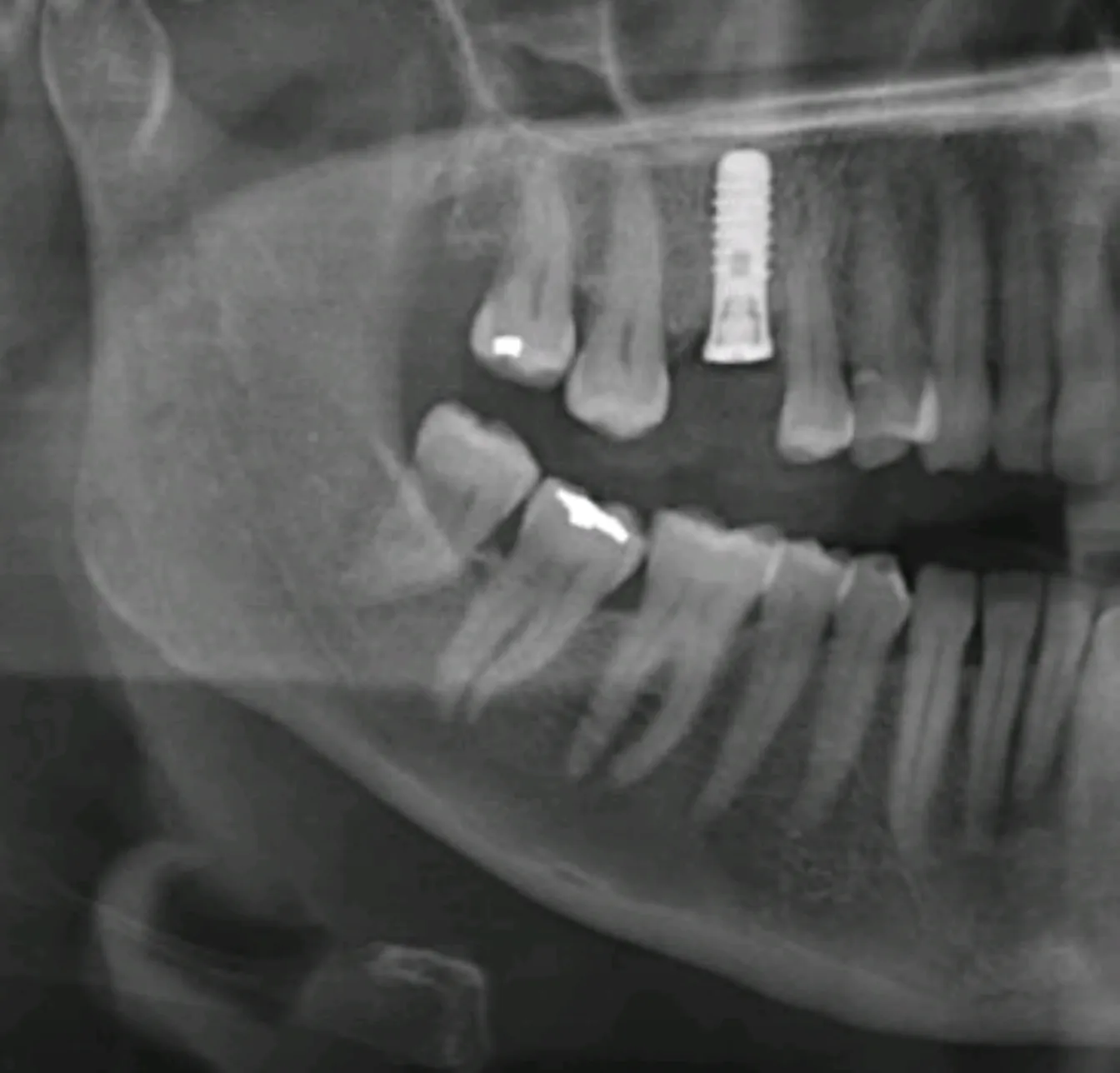
In one of our recent cases involving immediate implant placement in an infected maxillary site, the following sequence was used:
1. Chlorhexidine (0.12%) rinse
Used preoperatively to reduce soft tissue surface bacteria.
2. Hydrogen peroxide (3%) irrigation
Applied directly into the socket to disrupt biofilms and oxygenate the wound area.
3. Iodine-based disinfectant (e.g., Betadine)
Used as a final chemical decontamination agent to eliminate residual pathogens.
This protocol, supported by literature, provides broad-spectrum coverage and helps neutralize anaerobic bacteria that are commonly present in periodontal and endodontic infections.
Additionally, patients may receive systemic antibiotics before and/or after surgery, depending on clinical judgment and risk level.
What the Research Says
A systematic review published in the Journal of Periodontology evaluated outcomes of immediate implant placement in sites with periapical or periodontal infections. Contrary to traditional belief, the review concluded that infection alone is not an absolute contraindication—provided that thorough debridement and infection control measures are followed.
Key findings included:
-
Implant survival rates in infected sites were comparable to those in non-infected sites (94–97%)
-
The use of debridement, irrigation, and local antimicrobials significantly influenced outcomes
-
Grafting with biomaterials after debridement further stabilized soft and hard tissues
These insights challenge older protocols that advised against immediate placement in infected sites and encourage a more evidence-based, individualized approach.
Clinical Case Insight: Immediate Implant in an Infected Site
At Käkkirurgiskt Centrum Skåne, we recently treated a patient requiring extraction of an upper premolar with chronic apical infection. After careful debridement and execution of our antibacterial protocol, we successfully placed an implant with primary stability and grafted the residual socket with xenograft material. Healing was uneventful, and the site was restored with a ceramic crown after 12 weeks.
This case, like many others, demonstrates how precision in infection control can expand the indications for immediate placement—even in previously infected sites.
Advantages of Immediate Placement with Proper Infection Control
When performed correctly, immediate implant placement in infected sites offers several key benefits:
-
Preservation of bone volume
Reduces the risk of ridge collapse and maintains natural contours. -
Faster overall treatment time
No need to wait 2–4 months for socket healing before implant placement. -
Fewer surgeries and visits
Extraction and implant placement occur in a single procedure. -
Maintained soft tissue architecture
Especially beneficial in the aesthetic zone for gingival harmony. -
Improved patient satisfaction
Shorter treatment plans and less discomfort overall.
Is It Safe to Place Implants in Infected Sockets?
Yes—but only when infection is thoroughly addressed. The safety and predictability of immediate implant placement in infected sites depend entirely on the skill of the clinician and the use of proper protocols.
Patient selection, site decontamination, use of grafting materials, and strict postoperative care are all essential components for success. At our clinic, these steps are integrated into every treatment plan for immediate placement cases.
Why Choose Käkkirurgiskt Centrum Skåne?
Our clinic in Malmö is dedicated to evidence-based surgical dentistry. We provide:
-
Advanced 3D imaging and digital planning tools
-
Surgeon-led treatment by specialists in oral and maxillofacial surgery
-
Customized debridement and infection control protocols
-
Grafting and membrane techniques for site regeneration
-
A multilingual team and high standards of patient care
Whether you are a referring dentist or a patient in need of tooth replacement, we offer safe, predictable, and modern implant solutions—built on precision and scientific integrity.
Conclusion
Immediate implant placement can be a highly effective and time-efficient solution for tooth replacement—even in extraction sites with infection—if rigorous debridement and antibacterial treatment protocols are followed. The combination of mechanical and chemical cleaning, supported by modern implant design and surgical expertise, turns what was once considered a high-risk procedure into a reliable and safe standard of care.
To learn more about your implant options or to schedule a consultation, contact Käkkirurgiskt Centrum Skåne today.
Käkkirurgiskt Centrum Skåne
Södra Förstadsgatan 40 B, 3rd floor, 21143 Malmö
www.kcsskane.se
info@kcsskane.se
+46 760 033 303
Extern Link
#DentalImplants #ImmediateImplants #OralSurgery #InfectionControl #ImplantPlacement #Debridement #BoneHealing #Osseointegration #Tandimplantat #MalmöDentist